
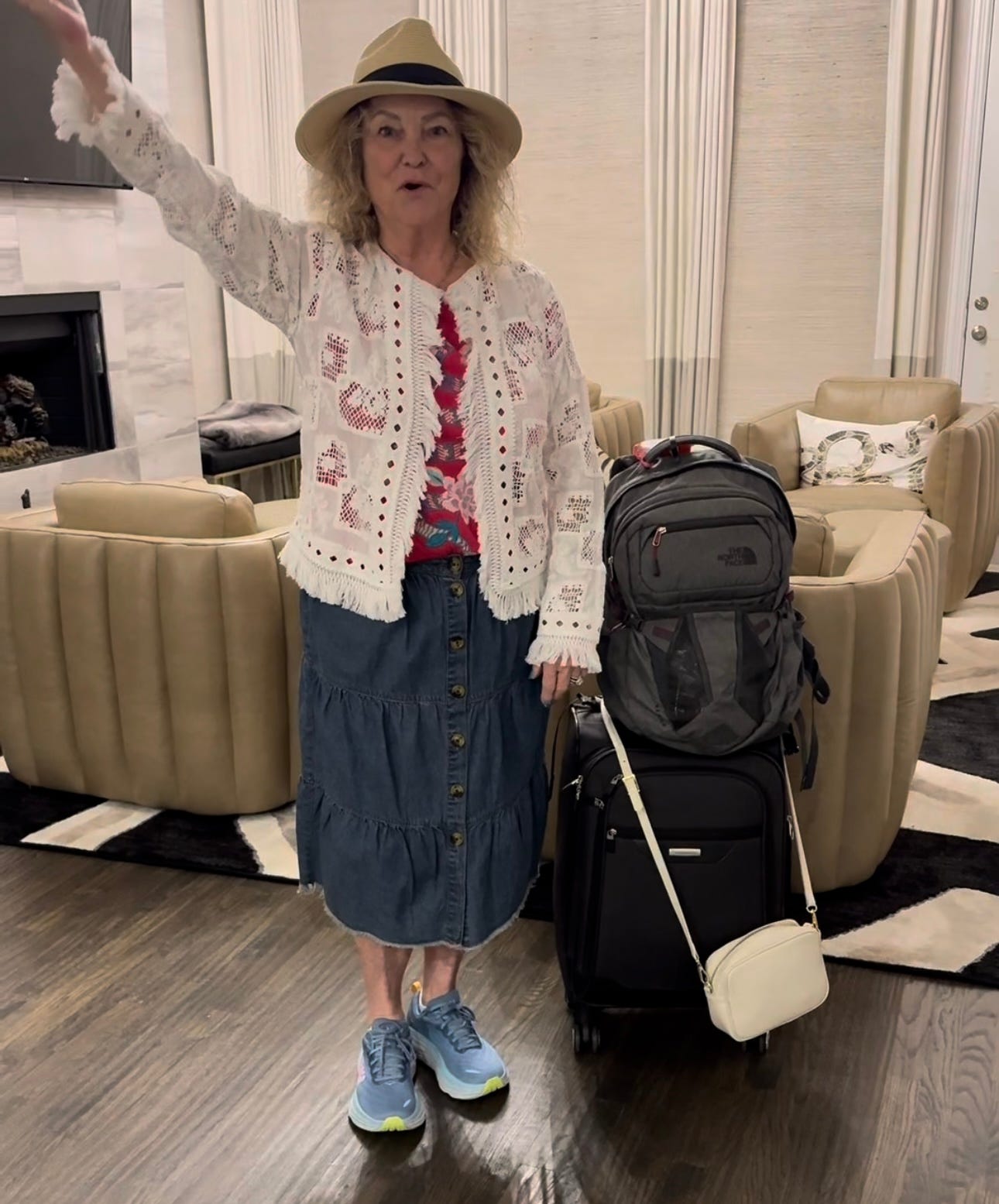
After decades of international travel, I’ve learned one invaluable lesson: less is more. Packing light isn’t just about convenience; it’s about freedom—the freedom to explore, to move easily, and to enjoy your trip without the stress of lost luggage or overstuffed suitcases.
There are two reasons I pack light: to ensure my essentials are always with me and to avoid overpacking things I’ll never wear. Let’s break it down.
1. Keeping My Essentials With Me
The tipping point for my carry-on-only travel philosophy came when a friend’s checked luggage ended up in Dubai instead of Sydney. She spent days scrambling for essentials while we carried on with our plans.
On another trip, a friend’s safari gear didn’t arrive in Tanzania for five days. She had to make do with a single blue dress, which quickly became a running joke.
And my son? His suitcase got swapped at baggage claim in Brussels, revealing a collection of rather unconventional gear—something that left us all speechless.
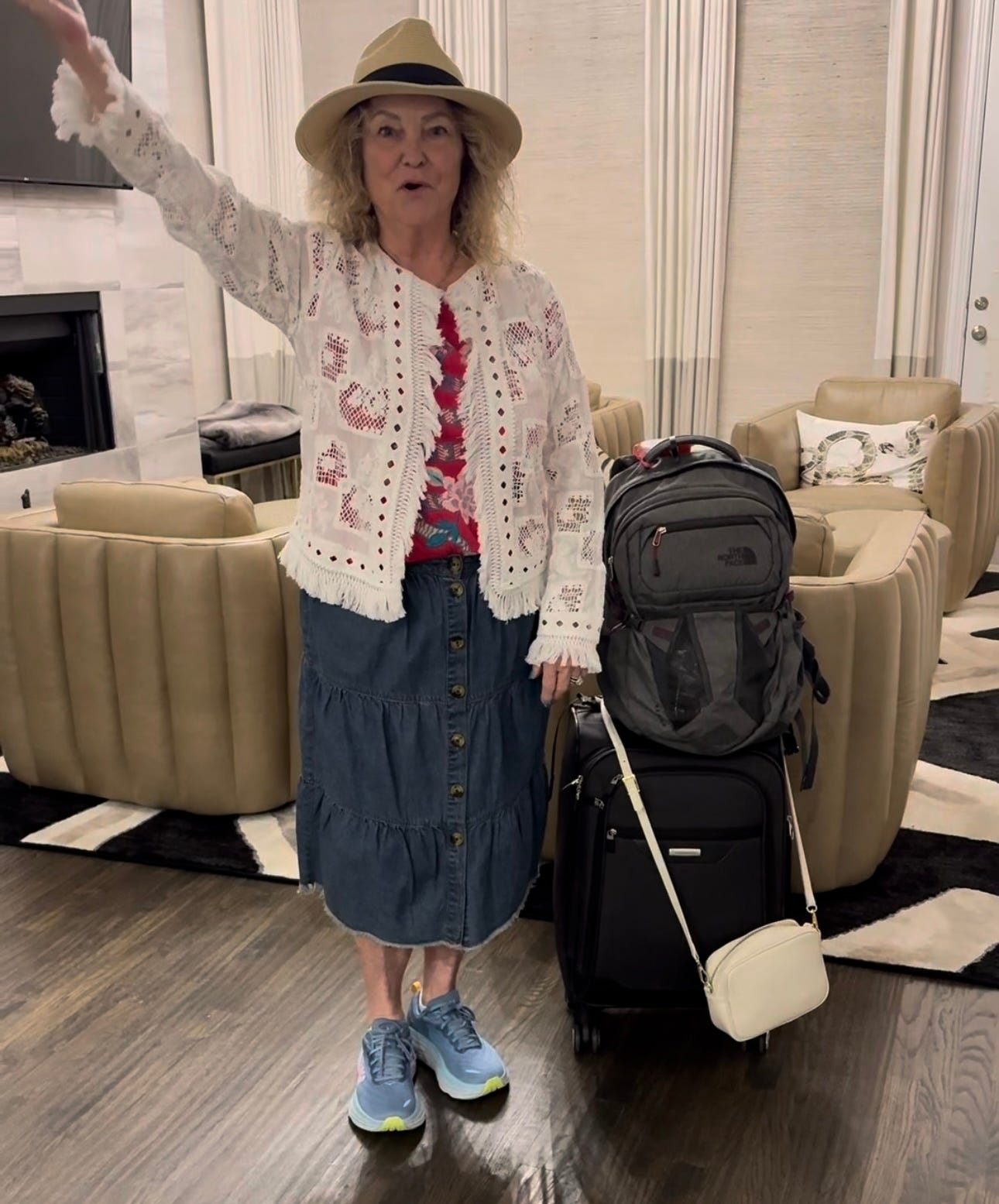
These experiences taught me a hard truth: checked luggage is always a risk. By traveling with only a carry-on and a backpack, I know my essentials—clothing, medications, documents, and electronics—are always by my side. No lost bags, no delays, no stress.
2. Don’t Overpack What You Won’t Wear
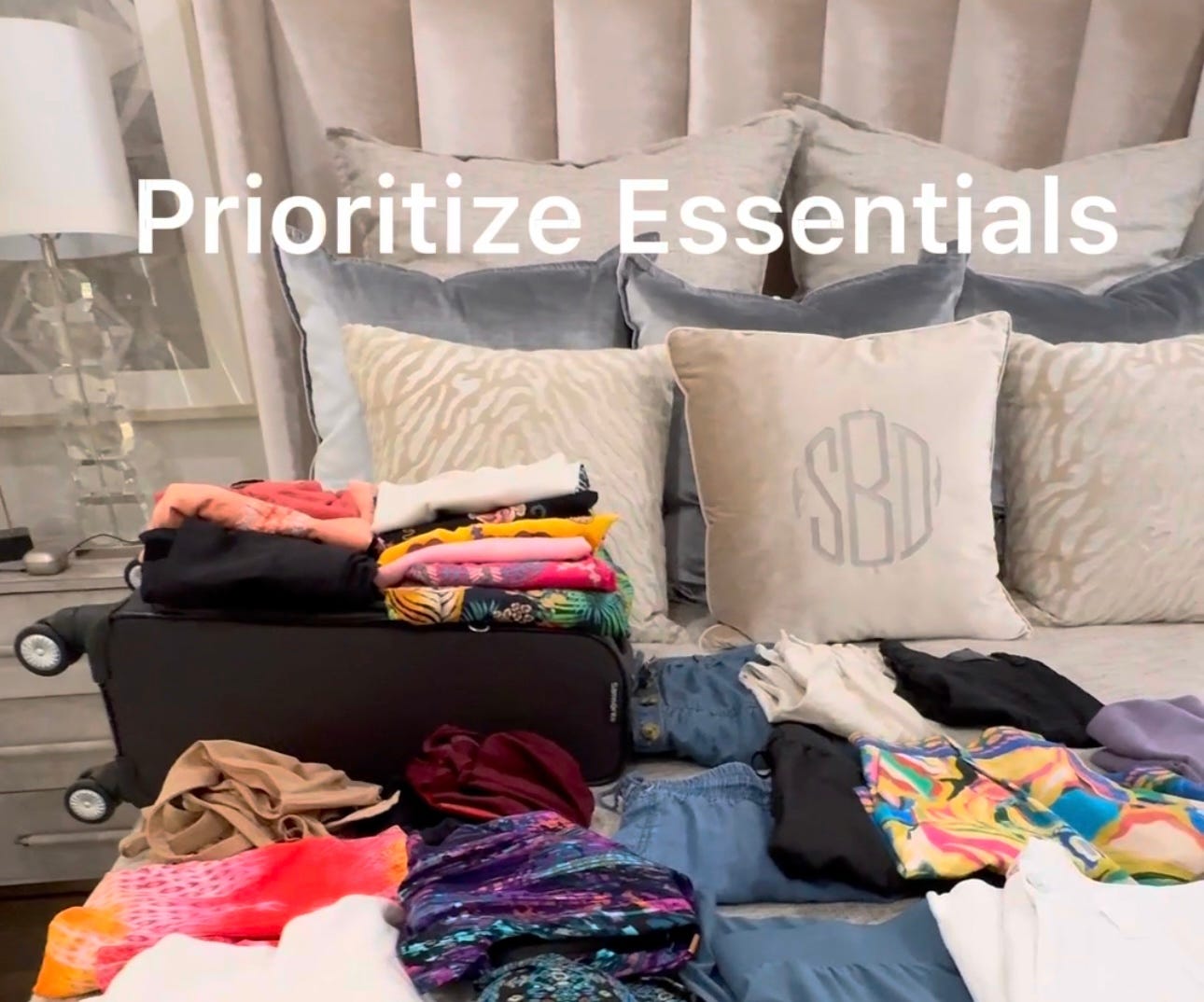
How often have you gone on a trip and realized you only used half of what you packed? Overpacking is a trap we all fall into, but I’ve learned the secret: if you think you’ll only wear something once, leave it at home.
Instead, focus on mix-and-match outfits. Choose versatile pieces in neutral colors that can work together to create multiple looks. A few well-chosen tops and bottoms can easily carry you through a two-week trip—or longer—with ease.
Packing light isn’t about sacrificing style; it’s about packing smart. With quick-dry fabrics, layers, and accessories, you can travel light and still look great.
3. Packing Strategy
Choosing the Right Gear
• Carry-On Suitcase: Opt for one that meets international size standards (22 x 14 x 9 inches). I prefer soft-sided luggage for its flexibility, but hard-sided options work well for protecting fragile items. Choose the largest bag allowed within carry-on standards.
• Medium Backpack: A medium-sized backpack is ideal as your personal item. Look for one with dimensions close to 18–22 inches tall, 12–14 inches wide, and 6–8 inches deep. It should have compartments for organizing travel documents, electronics, and other essentials.
• Crossbody Purse: Women may prefer a crossbody purse for touring or adventures to keep valuables close and hands free. When boarding, make sure your purse can fit inside your backpack to comply with airline rules. Most airlines allow only one carry-on suitcase and one personal item.
Quart-Sized Liquid Bag
To pass through security, pack your liquids, gels, creams, and aerosols in a quart-sized zip-top bag as required by TSA guidelines. Each item must be 3.4 oz (100 ml) or less. Common items to include:
• Shampoo, conditioner, moisturizer
• Sunscreen, toothpaste, lip balm (if squeezable)
• Liquid makeup (e.g., foundation, mascara, or liquid lipstick)
• Small bottles of lotion or hand sanitizer
Tip: Solid items like stick deodorant, solid lipstick, and bar soap do not count as liquids and can stay in your main bag. Keep your quart-sized liquid bag easily accessible for quick removal during security checks. This saves time and makes the screening process smoother.
Save Time at Security
If you want to breeze through airport security, consider applying for TSA PreCheck or Global Entry.
• TSA PreCheck: Offers expedited security screening in the U.S. You won’t need to remove shoes, belts, liquids, or laptops.
• Global Entry: Includes TSA PreCheck and speeds up re-entry into the U.S. after international travel.
Both programs save significant time and make your travel experience much smoother.
4. Pre-Travel Essentials
Local Currency
• Bring $100 equivalent in the local currency to cover immediate expenses (e.g., taxis, tips, snacks). Use ATMs to withdraw additional cash as needed.
• Exception: If traveling to Argentina, obtain pesos in advance or use a credit card to avoid unfavorable exchange rates at local ATMs.
Passport
• Ensure your passport is valid for at least six months beyond your travel dates—a requirement for many countries. If it’s nearing expiration, renew it well before your trip.
Visa Requirements
• Research visa requirements for your destination. Some countries allow visas on arrival, while others require advance applications. Check:
• Necessary documents
• Timelines and fees
• Entry requirements (e.g., proof of return ticket or accommodations)
Immunizations
• Verify health requirements, such as mandatory vaccines (e.g., Yellow Fever, Hepatitis A & B). Visit a travel clinic to:
• Get required immunizations
• Discuss health precautions like malaria prevention or altitude sickness remedies.
Medications
• Pack enough prescription medications for the entire trip, plus a few extra days’ supply in case of delays. Bring a small first-aid kit with essentials like pain relievers, antihistamines, and motion sickness remedies.
5. Packing Tips
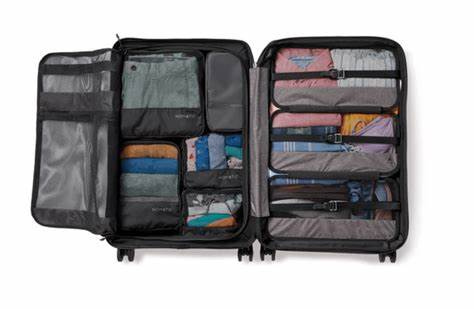
Roll, Don’t Fold
The age-old debate of rolling vs. folding often comes down to personal preference, but rolling has a distinct edge:
• Space-Saving: Rolled clothes take up less room and can fill gaps in your suitcase that folded items can’t.
• Wrinkle Prevention: Rolling minimizes creases compared to traditional folding.
• Easy Organization: Rolled items are easier to see and access, especially when paired with plastic bags or packing cubes.
For ultimate efficiency, place socks and undergarments inside shoes and use plastic bags to keep shoes separate from clean clothes.
Maximizing Space
• Wear Your Bulkiest Items: Save suitcase space by wearing your heaviest shoes, boots, or coat while traveling.
• Use Compression Bags: Perfect for bulky garments like sweaters or jackets. These squeeze out air, significantly reducing the size of your items.
• Pack an Expandable Tote Bag: Bring a collapsible bag for souvenirs or extra items on the way home.
Simplifying Packing with Plastic Bags
Plastic bags are a simple, lightweight solution to stay organized:
• Shoes: Keep shoes separate from clean clothes.
• Dirty Laundry: Contain soiled clothes until you can wash them.
• Accessories: Use zip-top bags for makeup, brushes, or hair ties.
• Wet Items: Store wet swimsuits or towels to protect the rest of your belongings.
They’re inexpensive, versatile, and make packing easier for any trip.
6. Packing for Specific Trips
Packing is highly dependent on where you’re going, the time of year, and the activities planned. Tailor your wardrobe to your destination and focus on versatility:
• Beach Trip: Pack lightweight clothing, swimsuits, sandals, and sun protection.
• Ski Trip: Include thermal layers, ski wear, gloves, and insulated boots.
• Cruise Ship: Plan for three versatile dinner outfits (Outfits A, B, and C) to rotate throughout your trip.
• City or Adventure Travel: Choose neutral-colored clothing that transitions seamlessly from casual sightseeing to a nice dinner.
7. Laundry: Your Secret Weapon
On trips longer than a week, laundry is a game-changer. Plan to wash dirty clothes every 7 days. Many accommodations offer laundry services, or you can hand wash delicates in the sink with travel detergent and hang them to dry overnight.
Why Packing Light is Life-Changing
Packing light offers freedom—freedom to move quickly, freedom from worrying about lost luggage, and freedom to enjoy your trip without excess baggage weighing you down.
Here are a few of my favorites!
Happy travels, and may your adventures be as light as your luggage!