
India is a land of contrasts—a place where ancient traditions meet modern energy, where bustling cities give way to serene landscapes, and where every moment is infused with history and culture.
Our journey through this extraordinary country began in Cochin, Kerala, and led us through the tranquil backwaters, the grandeur of Delhi, the timeless beauty of the Taj Mahal, and the vibrant pulse of Mumbai. What we experienced was more than just a trip—it was a journey that touched our hearts, awakened our senses, and deepened our appreciation for India’s rich heritage.
Cochin: The Gateway to India’s Spice Coast
A Cultural Crossroads
Disembarking from our Oceania cruise, we had a brief but immersive introduction to India in Cochin (Kochi), Kerala, a historic port city shaped by centuries of trade with Arabs, Chinese, and Europeans. This cultural crossroads is where Portuguese, Dutch, and British influences blend seamlessly with Kerala’s own deep-rooted traditions, creating a city that feels both historic and alive.
Fort Cochin’s Timeless Charm
Wandering through Fort Cochin, we were transported back in time, surrounded by European-style buildings, charming alleyways, and centuries-old churches. Along the coast, the Chinese Fishing Nets, an iconic symbol of Cochin, stood silhouetted against the sky. Watching local fishermen operate them using ancient techniques—just as they have for hundreds of years—was mesmerizing.

Historical Landmarks and Cultural Treasures
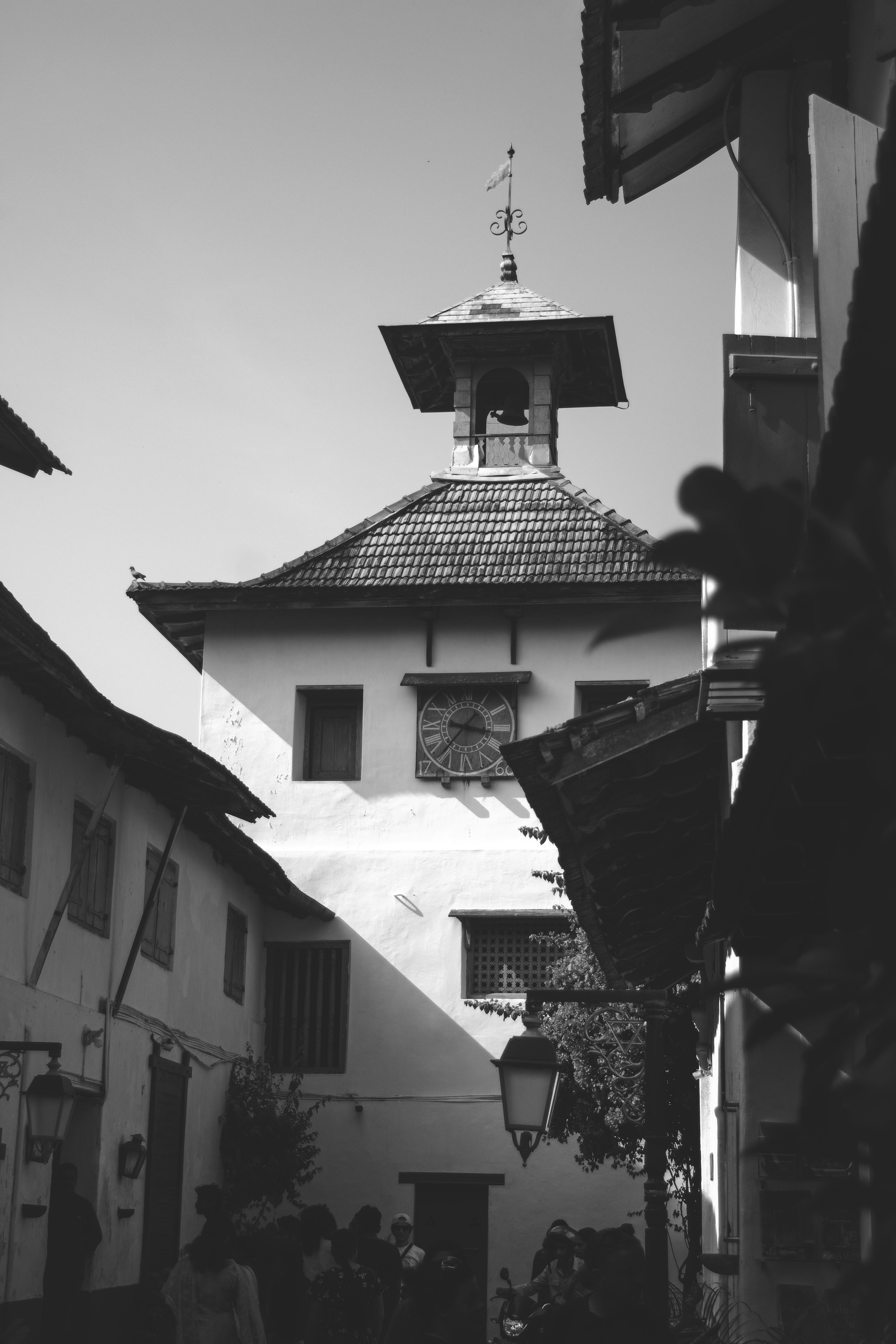
At Vasco da Gama Square, we stood at the very spot where the legendary Portuguese explorer was once buried before his remains were later moved to Lisbon. In Jew Town, we explored the Paradesi Synagogue, one of the oldest synagogues in the Commonwealth, with its gorgeous Belgian chandeliers, hand-painted tiles, and an aura of deep history. Nearby, the Kerala Folklore Museum brought the region’s artistic traditions to life, showcasing intricate masks, traditional Kathakali dance costumes, and ancient wooden carvings.
A Taste of Kerala
Our culinary journey began here with a traditional Keralan feast served on a banana leaf. We savored the flavors of meen curry (fish curry), aviyal (mixed vegetables in coconut curry), and payasam (a sweet pudding) – each dish a testament to the region’s rich culinary heritage.

Serene Backwaters of Alleppey
Leaving the city behind, we ventured into Kerala’s serene backwaters for a cruise aboard a traditional houseboat in Alleppey (Alappuzha). As we drifted through the labyrinth of palm-fringed canals and mirror-like waters, we glimpsed everyday life unfolding along the banks—women washing clothes at the river’s edge, fishermen casting their nets, and children waving excitedly from narrow wooden boats. The peaceful rhythm of the water, the distant calls of tropical birds, and the golden glow of the setting sun made this experience magical—an escape from time itself.
Local Insight: Our houseboat captain, a local who had navigated these waters for decades, shared stories of how the backwaters have changed over time, offering a unique perspective on the region’s ecology and culture.
In late afternoon, we bid farewell to Kerala’s gentle waterways and boarded a flight from Cochin International Airport (COK) to Indira Gandhi International Airport (DEL) in Delhi, ready for the next chapter of our adventure.
Checking into The LaLit Hotel, we settled in for the night, preparing for our deep dive into the heart of India’s capital the next morning.
Delhi: A Tale of Two Cities
Delhi is a city where past and present collide—a place where the grandeur of New Delhi’s wide avenues and colonial landmarks contrasts sharply with the bustling, maze-like alleys of Old Delhi. It is a city that tells the story of India’s layered history, from Mughal emperors to British rule to modern democracy.
New Delhi’s Colonial Grandeur
Our exploration began in New Delhi, where order and elegance define the landscape. At India Gate, a towering war memorial reminiscent of the Arc de Triomphe, we stood in silent tribute to the soldiers who lost their lives in World War I.
Nearby, Rashtrapati Bhavan, the grand residence of India’s President, loomed in stately splendor, a lasting symbol of British colonial architecture. Gandhi Smriti, the site where Mahatma Gandhi spent his final moments before his assassination, was a powerful and deeply moving stop, filled with exhibits that capture the essence of his life’s mission.
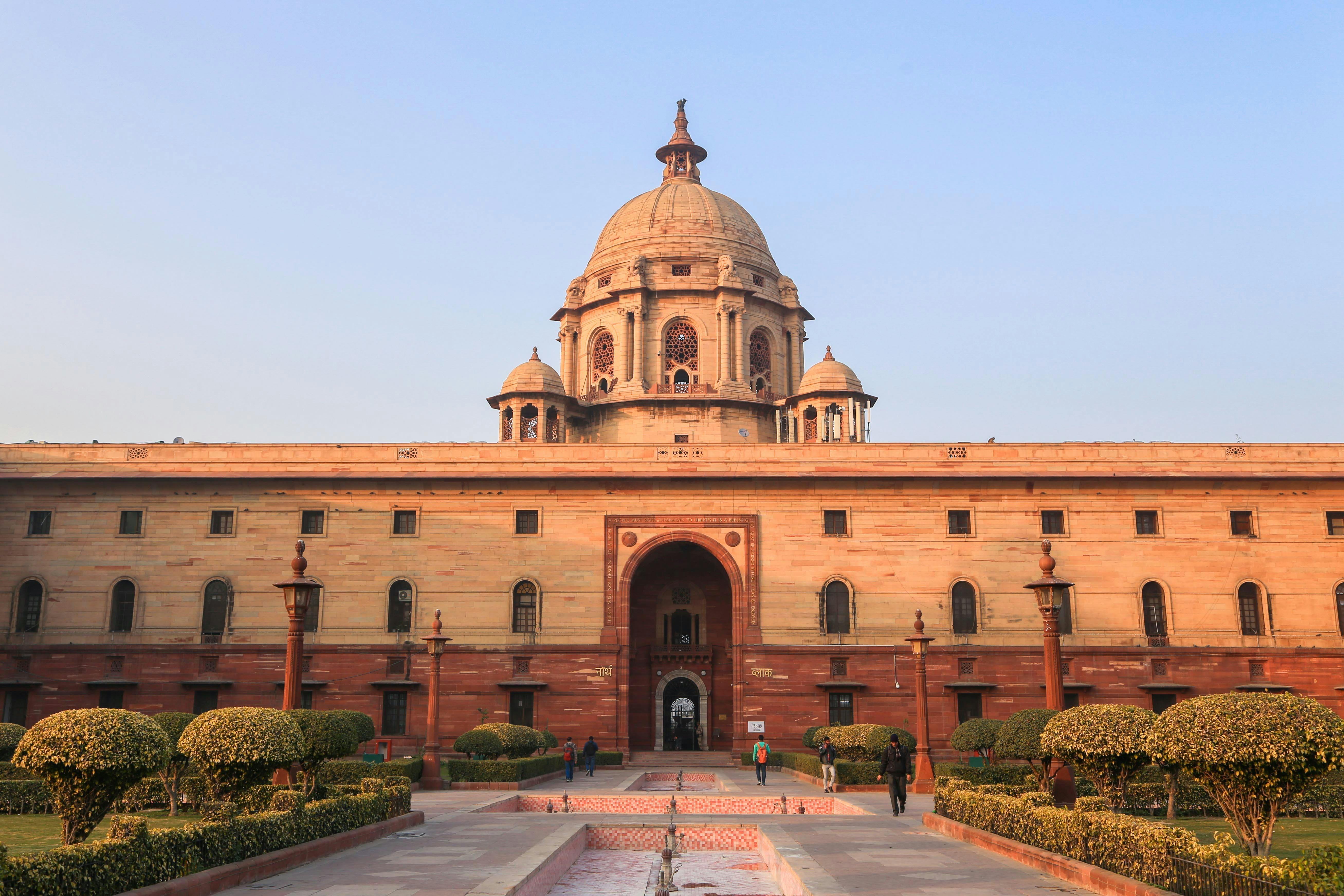
Travel Tip: Visit India Gate in the evening when it’s beautifully illuminated and the surrounding area comes alive with locals enjoying ice cream and street food.
Old Delhi’s Bustling Bazaars
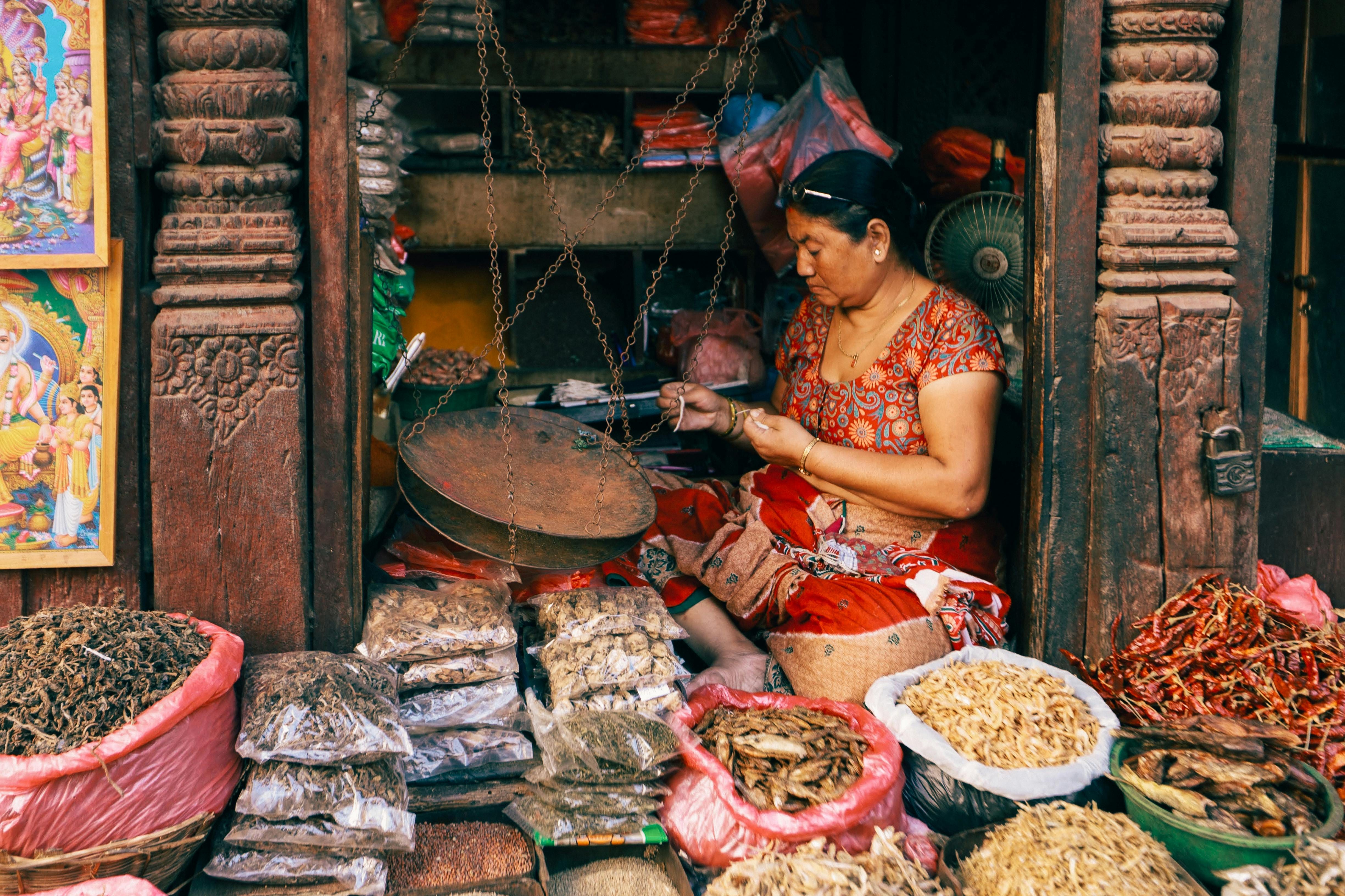
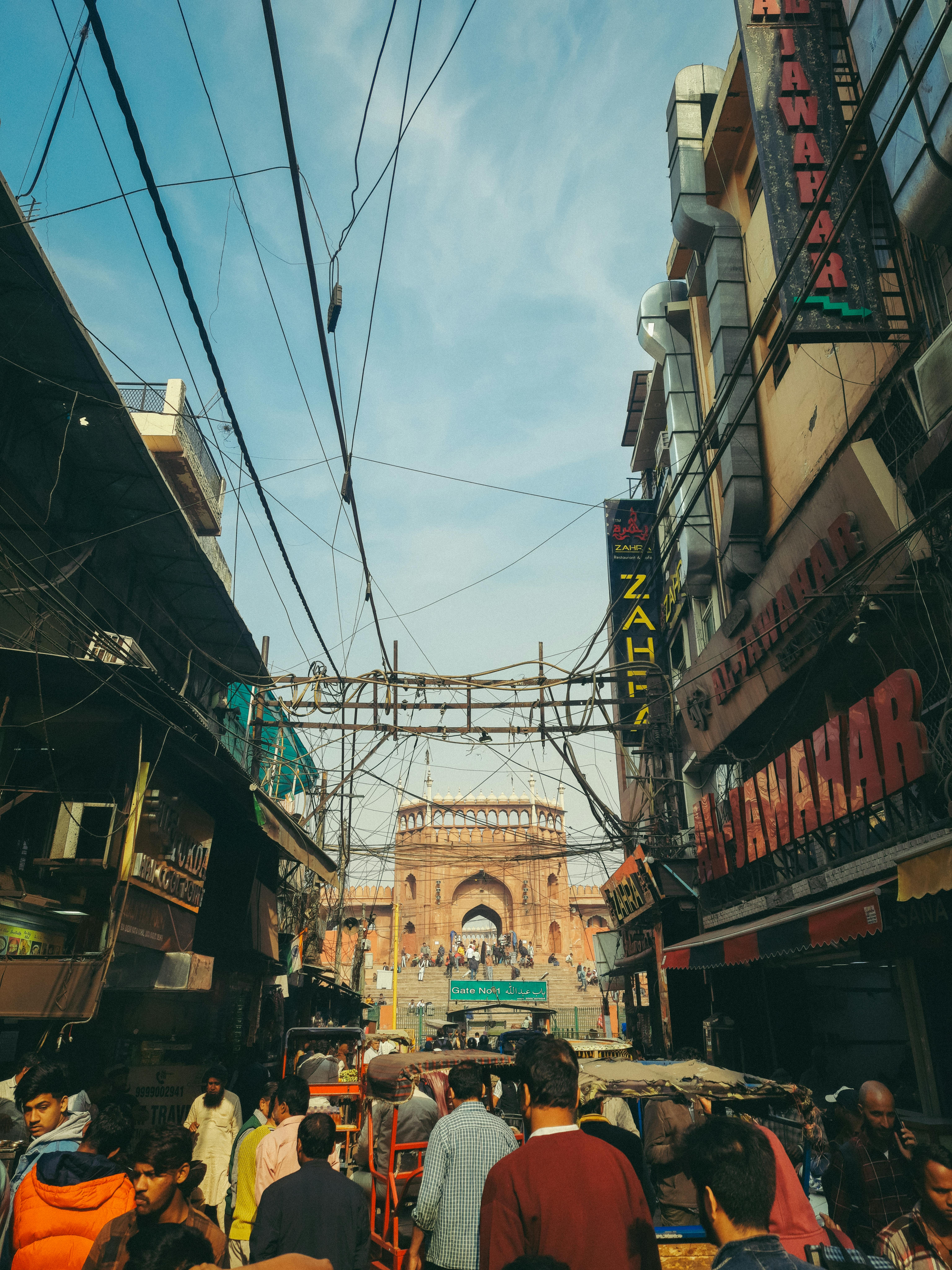
Leaving New Delhi’s symmetry behind, we plunged into the sensory overload of Old Delhi, where history is woven into the fabric of everyday life. As we entered Chandni Chowk, one of the city’s oldest markets, the streets narrowed, and the energy intensified. We climbed into a rickshaw, weaving through a labyrinth of lanes overflowing with spice traders, silk merchants, and sizzling street food stalls. The air was thick with the aroma of roasted nuts, fragrant masalas, and the sweet scent of jalebis frying in syrup. The market was alive with chaotic beauty—merchants haggling, shoppers bargaining, and the occasional cow meandering through the crowd.
Culinary Delights in Delhi
In Old Delhi, we stopped at the famous Karim’s restaurant, established in 1913, for a taste of authentic Mughlai cuisine. The butter chicken and mutton burra were melt-in-your-mouth delicious, offering a glimpse into Delhi’s rich culinary heritage.
Jama Masjid: A Spiritual Haven
At the heart of Old Delhi, we arrived at Jama Masjid, one of India’s largest and most magnificent mosques. Standing in its vast courtyard, surrounded by towering minarets, we were awed by its grandeur. The contrast between the serenity within and the frenetic energy just beyond its gates was striking.
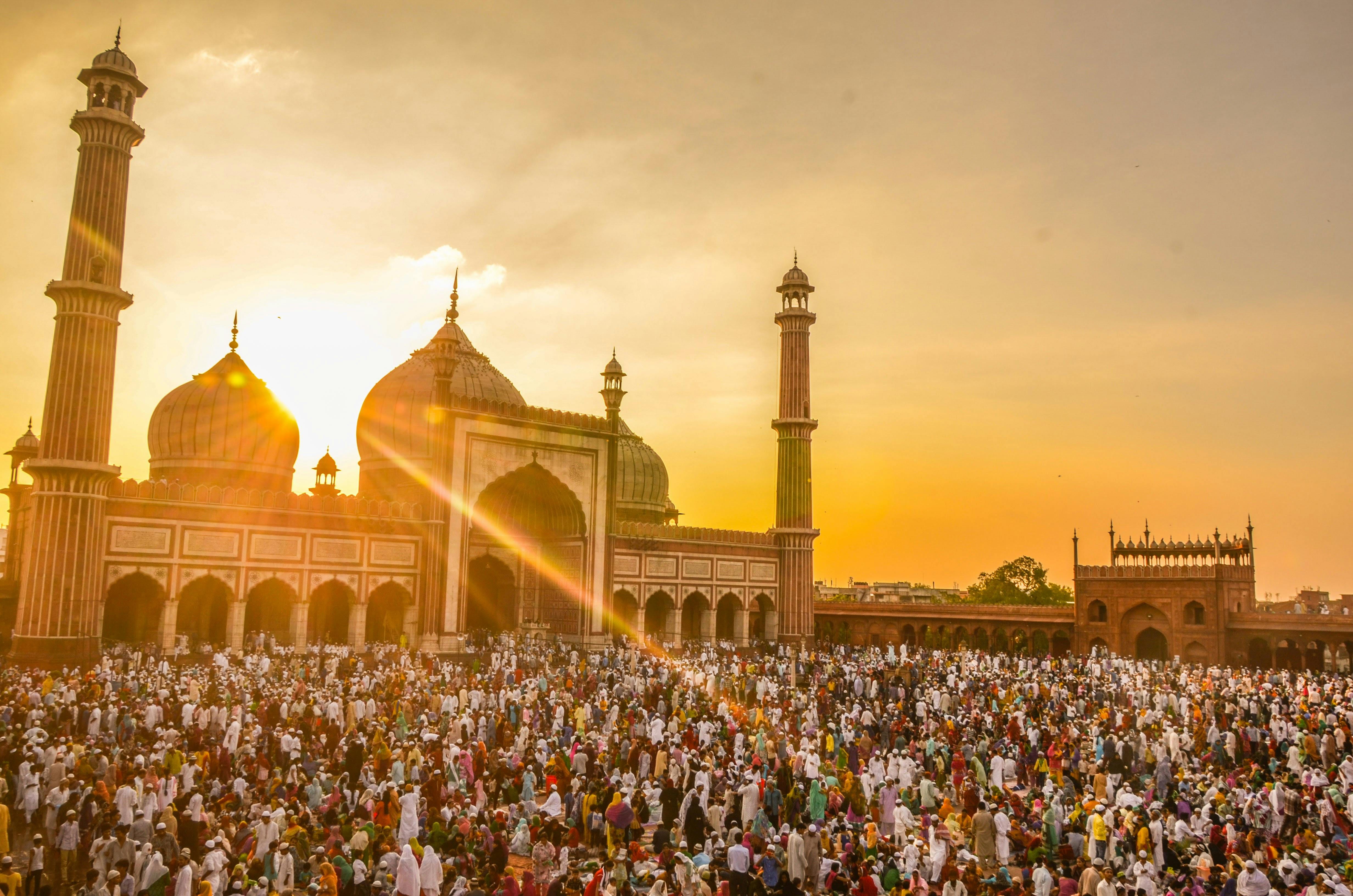
Cultural Insight: We observed the call to prayer at Jama Masjid, a powerful moment that highlighted the spiritual significance of this historic site.
After a day of discovery, we returned to our hotel, reflecting on Delhi’s ability to balance its imperial past with its modern aspirations. The next morning, we departed for Agra, home to one of the most breathtaking testaments to love ever built—the Taj Mahal.
Traveling to Agra by Bus
The journey from New Delhi to Agra took us along the Yamuna Expressway, a smooth, modern highway cutting through the heart of rural India. As we left the city’s chaos behind, the landscape transformed into a patchwork of green fields, small villages, and roadside stalls selling fresh fruit and chai.
Along the way, we saw sacred cows wandering freely, unbothered by the traffic, a common sight in India where they are revered. The drive offered a glimpse into daily life—farmers tending to their crops, children playing along dusty roads, and vibrant trucks adorned with intricate patterns and colorful tassels.
Travel Tip: The journey from Delhi to Agra takes about 4 hours. Start early to avoid traffic and have more time in Agra.
As we approached Agra, the skyline changed, with red sandstone forts and Mughal-era domes coming into view. Finally, we arrived at our luxurious retreat, Jaypee Palace Hotel, a stunning property that blended Mughal grandeur with modern elegance. Eager to explore, we checked in and prepared for our first visit to the Taj Mahal.
Taj Mahal: A Journey Through Time
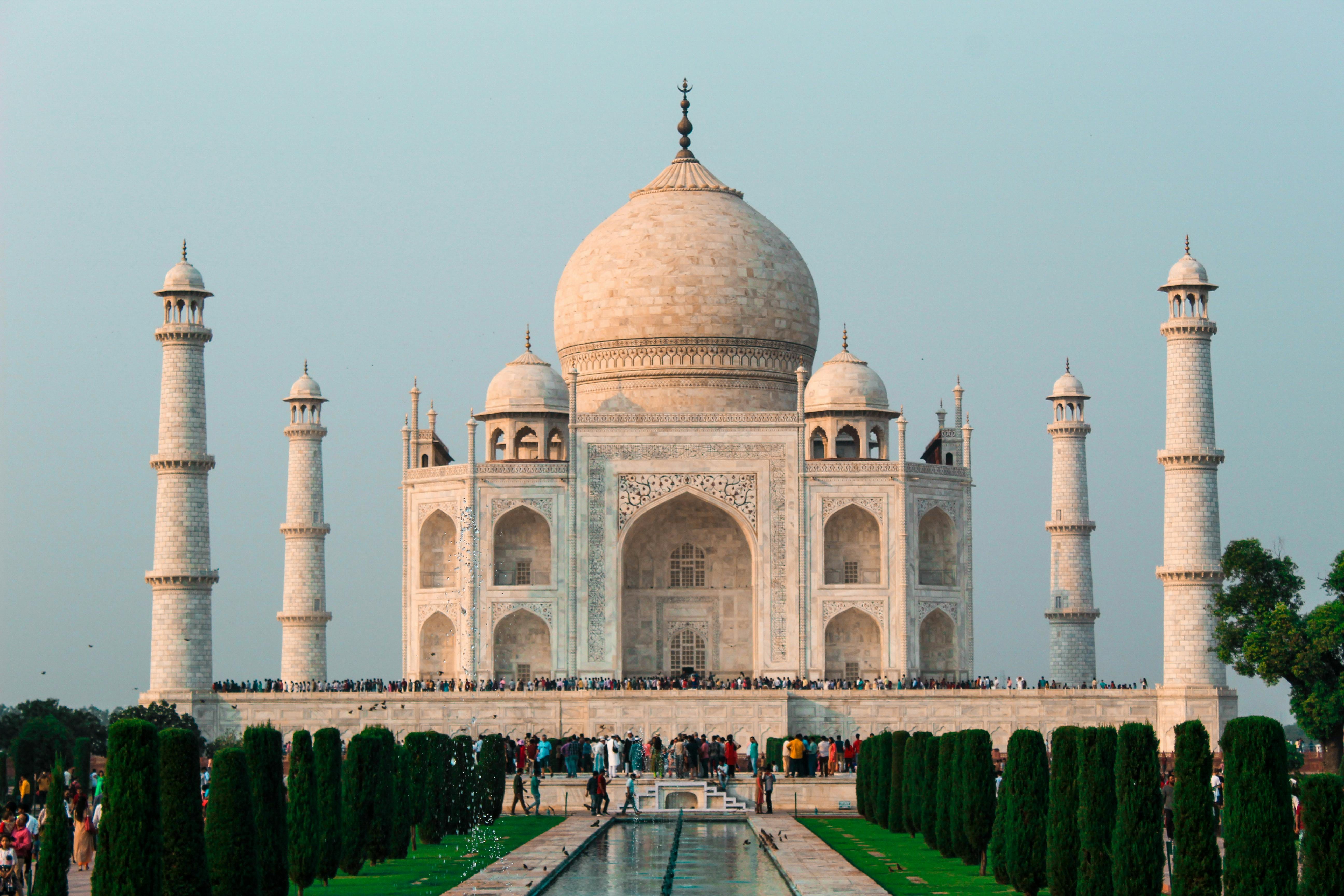
The Taj Mahal is not just an architectural wonder—it is a masterpiece, a love story, and a symbol of India’s rich cultural heritage. Standing along the banks of the Yamuna River in Agra, this ivory-white marvel continues to captivate travelers with its breathtaking beauty and profound history.
First Glimpse of the Taj Mahal
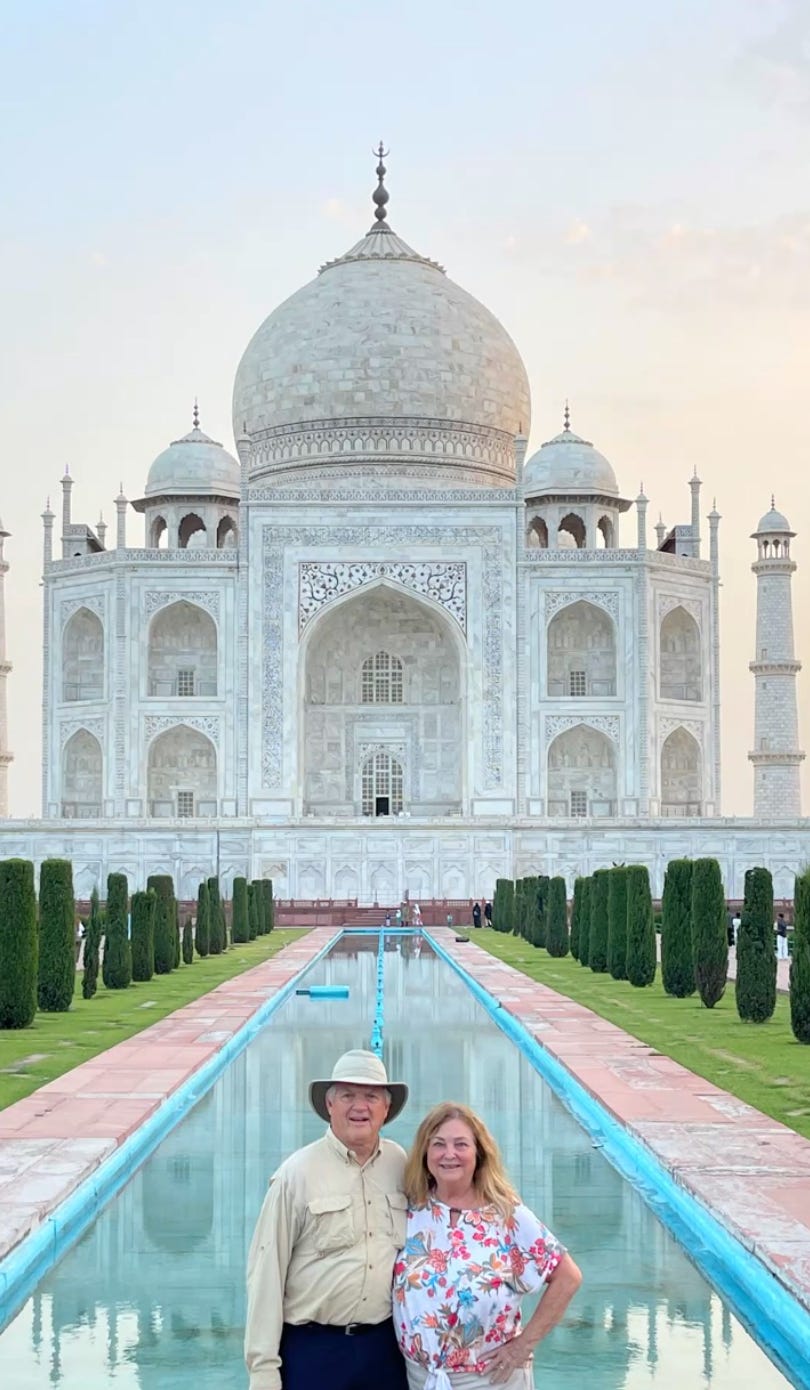
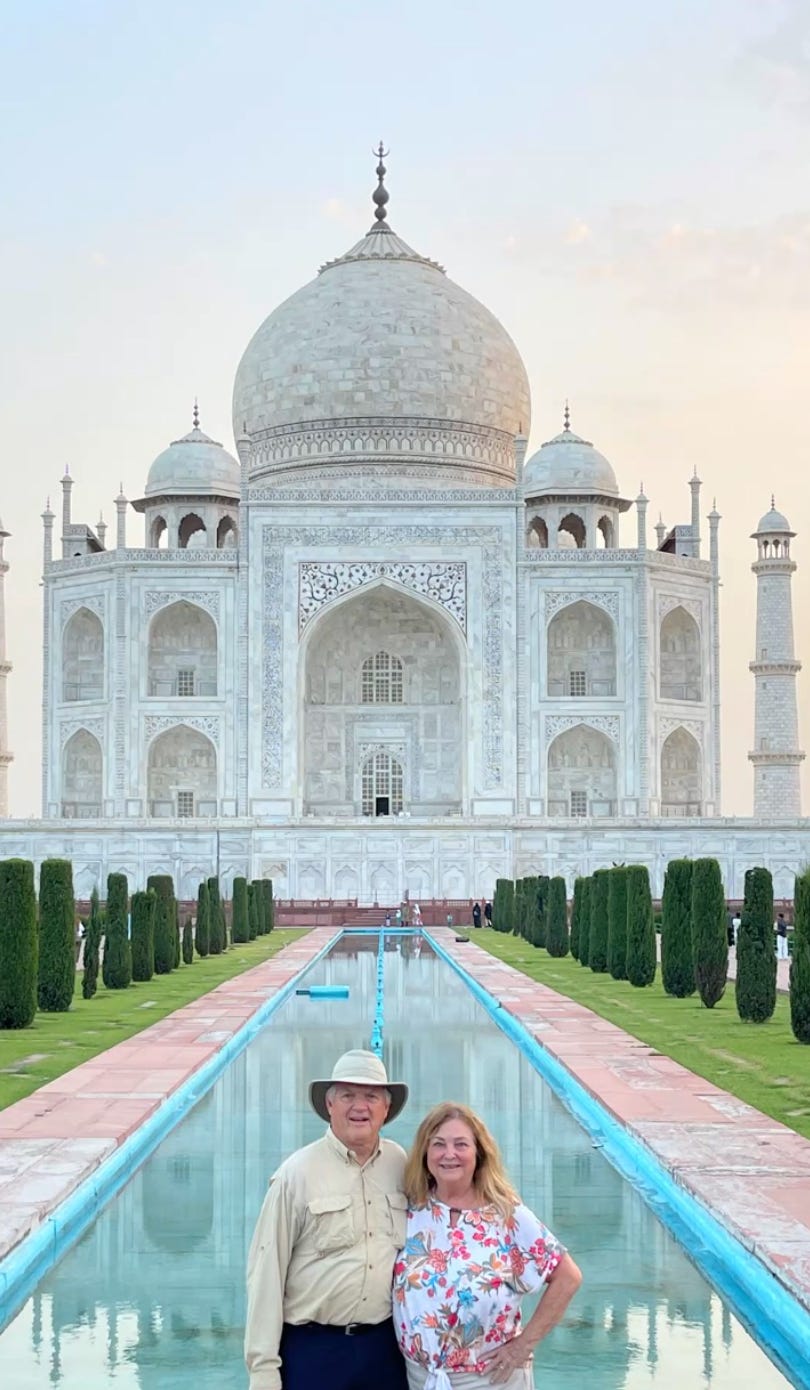
Nothing can truly prepare you for your first sight of the Taj Mahal. After navigating multiple security checkpoints, we entered the vast courtyard. Passing through the Darwaza-i-Rauza(Great Gate), we caught our first full view of the monument—a gleaming white silhouette against the sky, perfectly symmetrical and radiating a quiet magnificence.
Commissioned in 1631 by Emperor Shah Jahan, the Taj Mahal was built as an eternal tribute to his beloved wife, Mumtaz Mahal, who died giving birth to their 14th child. The emperor’s grief led him to create what would become one of the most admired structures in the world. Over 20,000 artisans from Persia, Turkey, and India spent 22 years perfecting the inlaid marble, intricate floral carvings, and delicate calligraphy that adorn its surface.
Experiencing the Taj Mahal Up Close
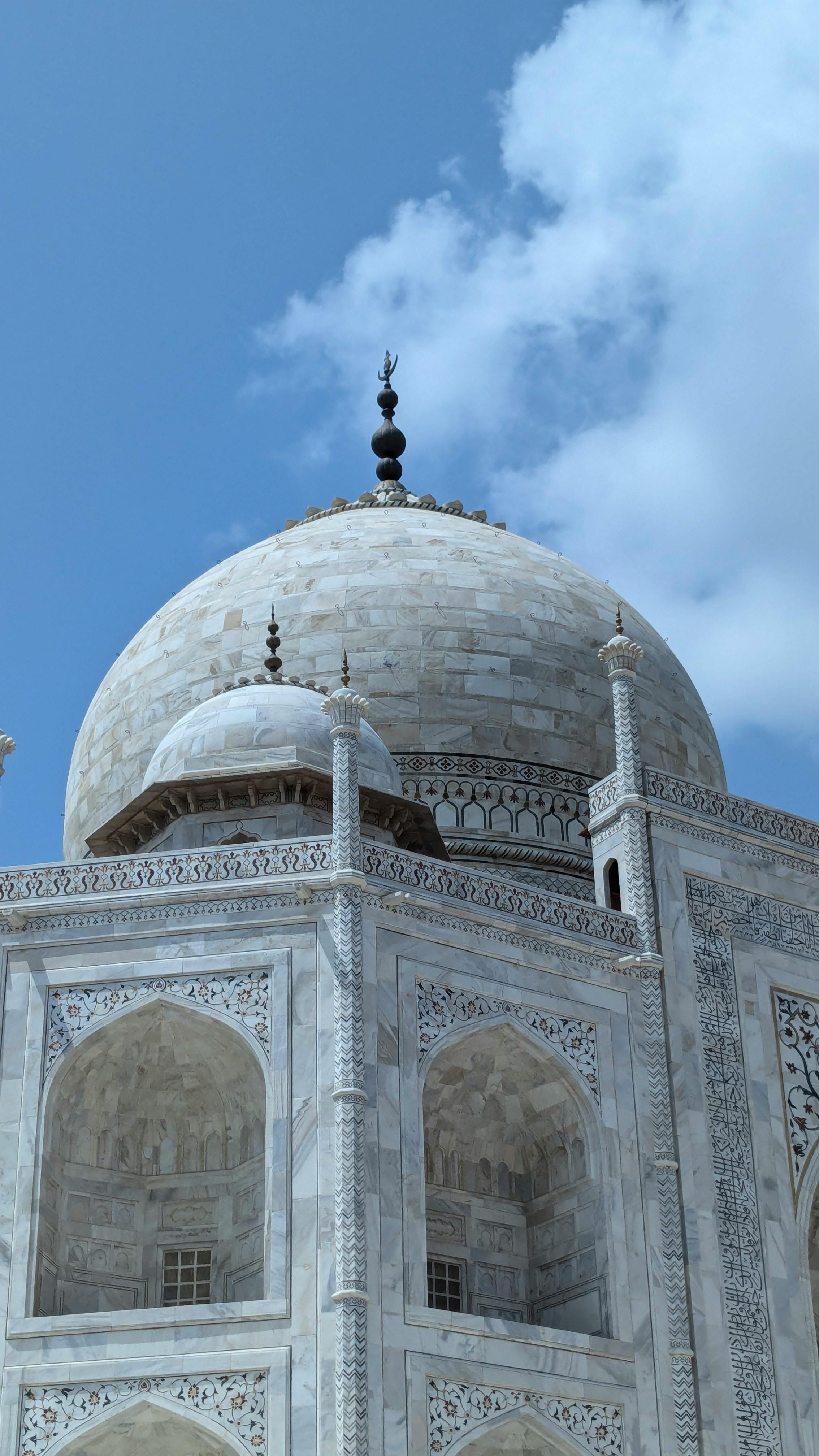
As we stepped deeper into the complex of gardens, fountains, and reflecting pools, the Taj Mahal’s grandeur became even more mesmerizing. The pietra dura inlay work, with its delicate floral patterns crafted from semi-precious stones, and the calligraphy-engraved entrance archways, which feature verses from the Quran, spoke of an unmatched level of craftsmanship.
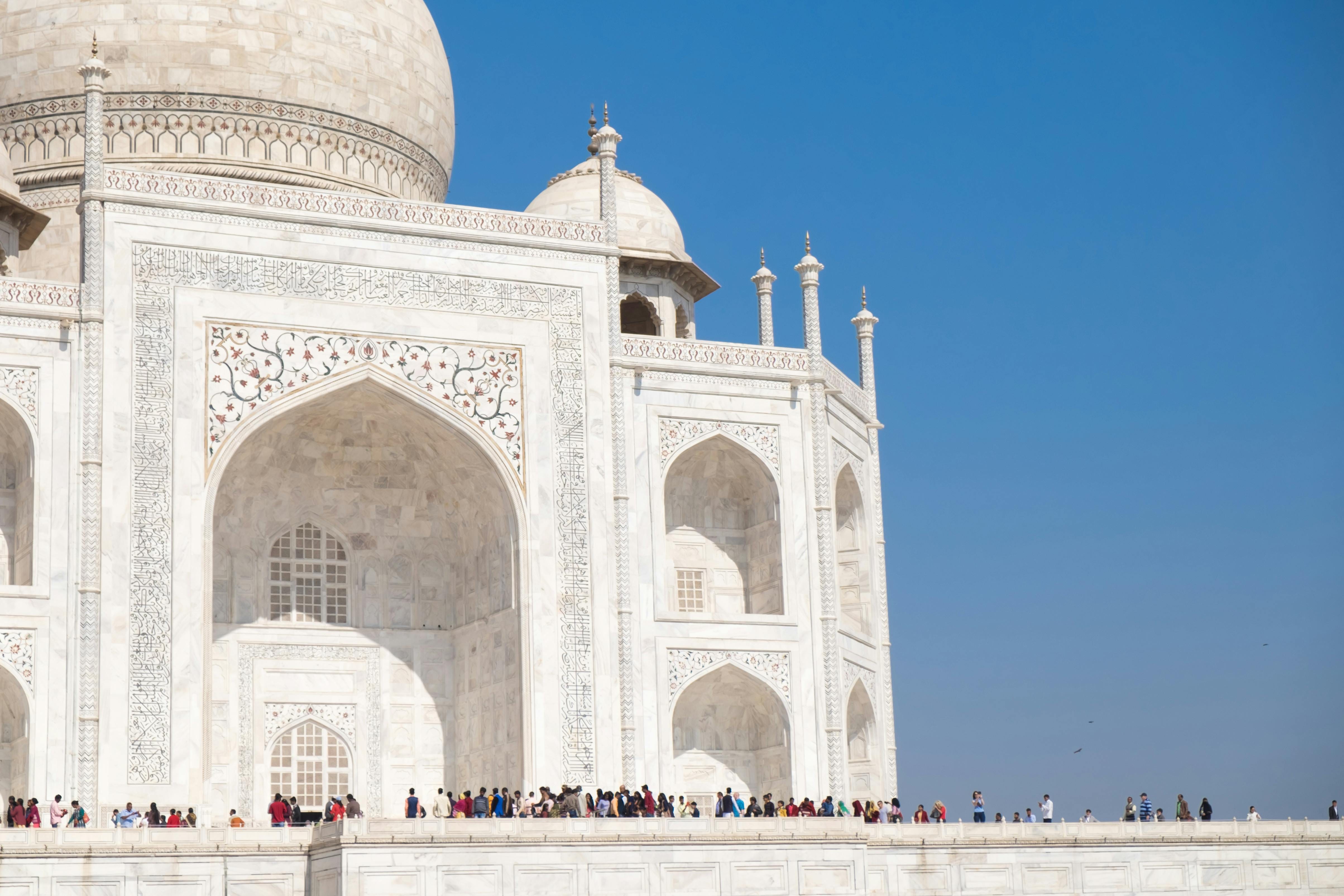
The four minarets, each leaning slightly outward, were designed to protect the main tomb in the event of an earthquake—a testament to the ingenuity of Mughal architects. The central dome, rising gracefully above the tomb, seemed to defy time, light, and gravity.
Travel Tip: Hire a licensed guide to fully appreciate the intricate details and rich history of the Taj Mahal. They can provide insights that guidebooks often miss.
Sunset at the Taj Mahal
As the sun dipped below the horizon, the Taj Mahal transformed before our eyes. The pristine white marble, kissed by the fading light, shifted from soft pink to golden amber to deep orange. Its reflection in the still waters of the long rectangular pool enhanced the dreamlike scene, creating a moment of absolute magic.
Sunrise at the Taj Mahal
For the most peaceful and enchanting experience, we arrived before dawn to witness sunrise at the Taj Mahal. As the first rays of morning light touched its surface, the marble glowed with delicate hues of gold and silver, casting an ethereal glow.
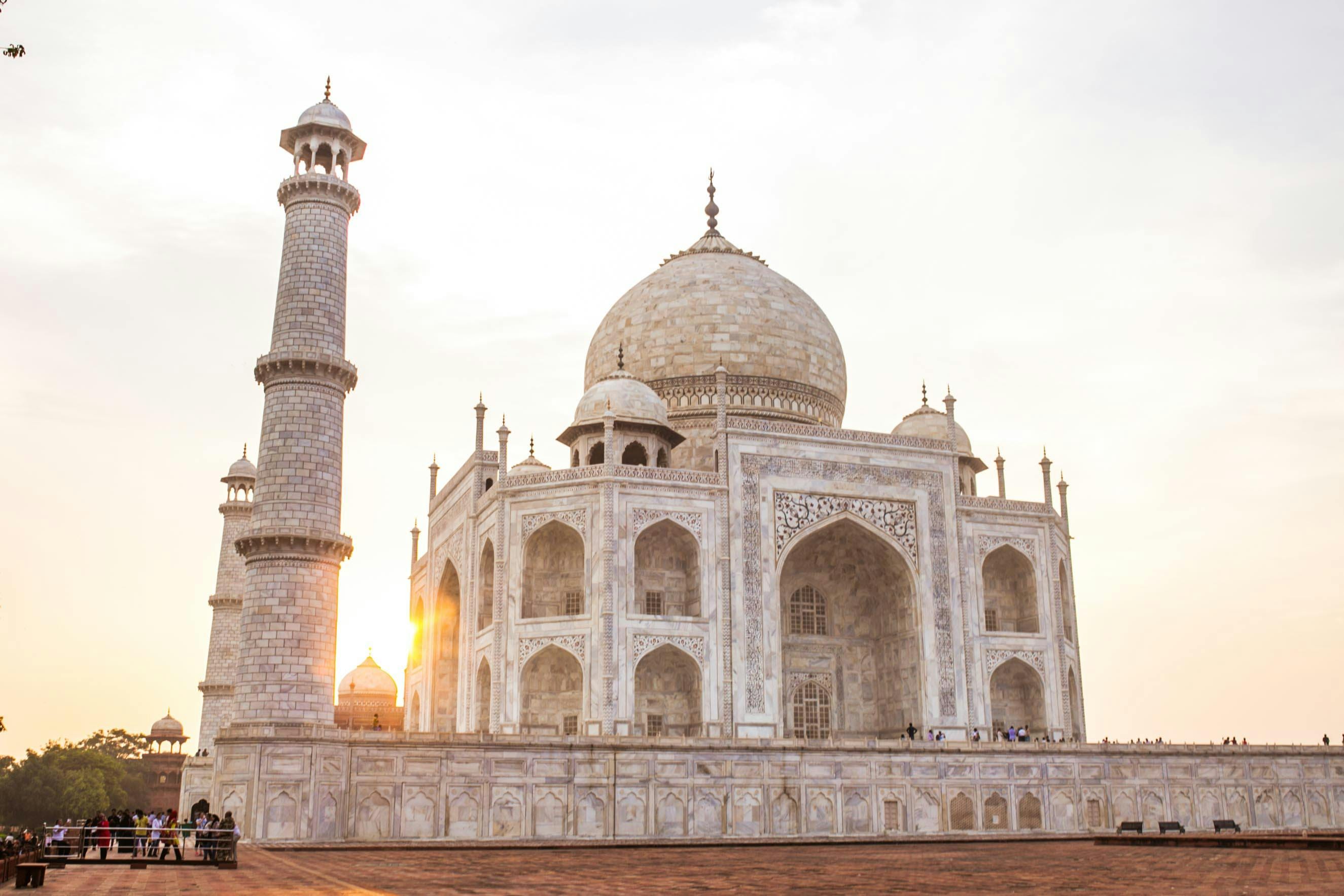
With fewer visitors in the early hours, we could fully appreciate the exquisite details—every floral carving, every gemstone inlay, and every architectural feature told a story of love, loss, and artistic perfection.
Photography Tip: The best photos of the Taj Mahal are often taken from the Mehtab Bagh gardens across the river, especially during sunset.
Recognized as a UNESCO World Heritage Site, the Taj Mahal remains one of the most breathtaking tributes to love ever built, a masterpiece that continues to inspire awe centuries after its completion.
Agra Fort: A Tale of Power and Loss
After experiencing the Taj Mahal’s splendor, we visited Agra Fort, a massive red sandstone fortress that once served as the seat of Mughal power. The fort, with its grand halls, intricate carvings, and sweeping courtyards, offered a striking contrast to the delicate beauty of the Taj Mahal.
It was within these walls that Shah Jahan spent his final years, imprisoned by his own son, Aurangzeb. From a distant window, he could only gaze at the monument he had built for love but would never enter again. The sense of loss and longing was palpable, making Agra Fort a site not only of historical grandeur but also of deep emotional weight.
Historical Insight: Our guide shared the poignant story of Shah Jahan’s imprisonment, adding a layer of human drama to the fort’s imposing architecture.
Artistry in Agra: The Kilnathi Tile Shop
Before leaving Agra, we stopped at a mosaic tile workshop, where skilled artisans demonstrated the ancient pietra dura technique, the same intricate inlay method used in the Taj Mahal’s marble designs. Watching them piece together thousands of semi-precious stones into elaborate floral patterns was mesmerizing.
We purchased a stunning marble table, crafted from over 8,000 inlaid stones, a timeless reminder of this extraordinary place and the artistry that still thrives in Agra today.
Shopping Tip: While beautiful, these inlaid marble pieces can be expensive. Be prepared to negotiate, and ensure you have a way to ship larger items home safely.
Onward to Mumbai
After an unforgettable stay in Agra, we returned to New Delhi for our flight to Mumbai. The next leg of our journey would take us into the heart of India’s most dynamic metropolis, where colonial history, Bollywood glamour, and the pulse of modern India all coexist in a single, electrifying city.
Mumbai: A City of Dreams and Contrasts
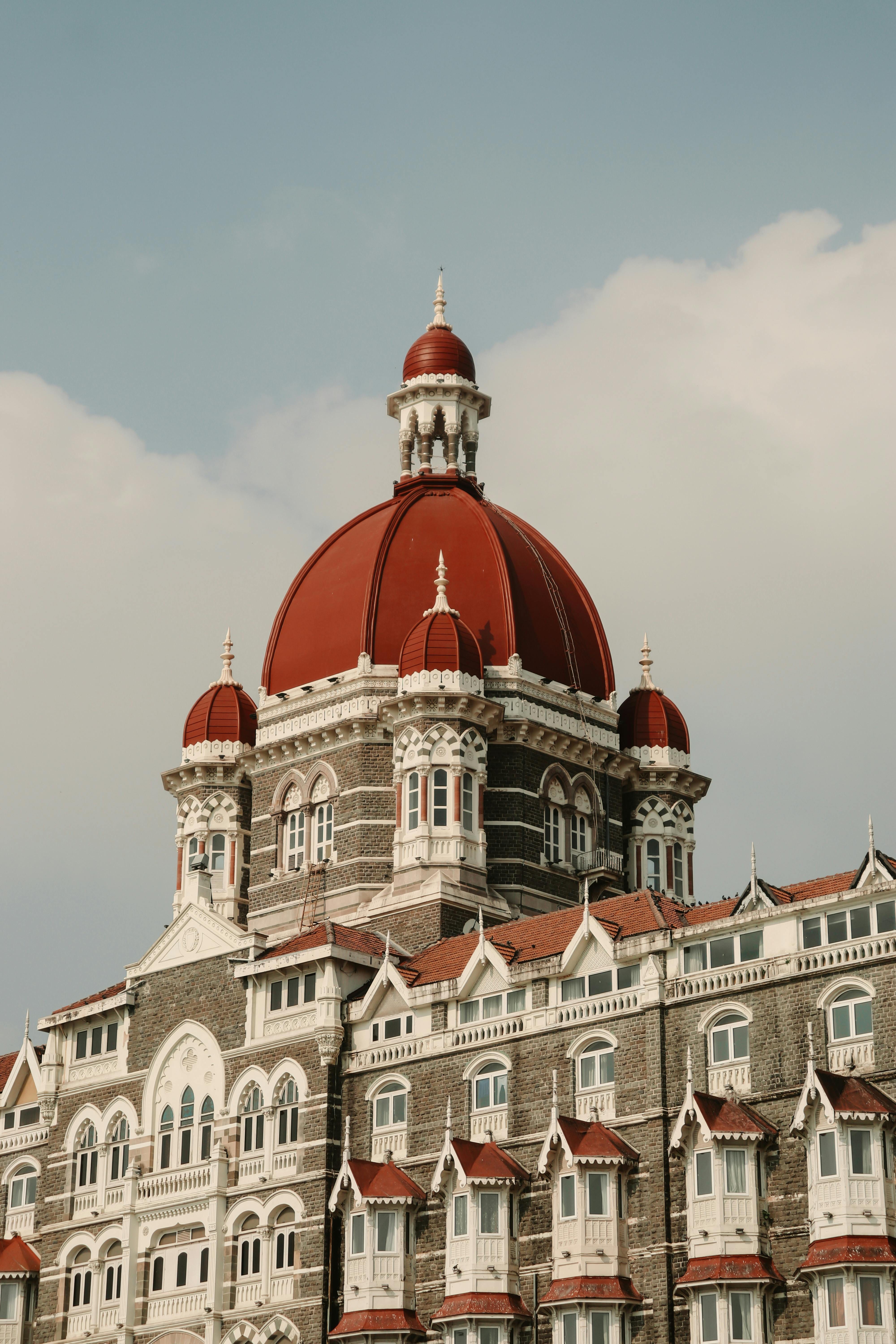
Mumbai is India’s financial powerhouse, Bollywood capital, and cultural melting pot, where colonial architecture, modern skyscrapers, and vibrant street life blend seamlessly. The city pulses with energy—fast-paced, ambitious, and unapologetically alive. From the historic grandeur of its British-era landmarks to the hidden enclaves of its creative communities, Mumbai is a city of extremes, where tradition and modernity collide in the most fascinating ways.
The Dabbawala System: Mumbai’s Logistical Marvel
One of Mumbai’s most remarkable traditions is its Dabbawala system, a century-old network that delivers over 200,000 home-cooked meals daily to office workers across the city. Using color-coded tin lunchboxes, bicycles, and local trains, these men navigate the city’s bustling streets with near-perfect accuracy—a feat so precise that Harvard Business School has studied it as a model of operational excellence.
Watching the Dabbawalas work in perfect synchronization, without the aid of modern technology, was mesmerizing. Their low-tech, high-efficiency system is a testament to Mumbai’s organized chaos—a city that never stops moving but somehow keeps everything running with clockwork precision.
Local Experience: We had the opportunity to follow a Dabbawala on his route, gaining firsthand insight into this incredible system and the dedication of these workers.
Colonial Grandeur & Modern Bustle
Our exploration began at the Gateway of India, a grand archway built in 1911 to commemorate King George V’s visit to Bombay. Overlooking the Arabian Sea, this historic structure remains Mumbai’s most recognizable landmark, a place where tourists snap photos and locals gather for evening walks.
Nearby, Chhatrapati Shivaji Maharaj
Terminus, a UNESCO-listed railway station, stood as a stunning blend of Victorian Gothic and traditional Indian architecture. With intricate carvings, arched windows, and towering spires, the station looked more like a palace than a transportation hub—a lasting imprint of Mumbai’s colonial past.
We ventured into the heart of Colaba Causeway, a lively shopping district where luxury boutiques and street markets exist side by side. The air was thick with the aroma of sizzling street food, blending spices, grilled meats, and sweet masala chai. Every corner of Mumbai felt like a sensory overload, with its chaotic yet beautifully orchestrated rhythm.
Culinary Highlight: We couldn’t resist trying Mumbai’s famous vada pav, a spicy potato fritter in a soft bun, from a street vendor. It’s often called the “Indian burger” and is a must-try local delicacy.
The Industrious Spirit of Mumbai
At Dhobi Ghat, Mumbai’s famous open-air laundromat, we watched as hundreds of workers scrubbed, washed, and dried thousands of garments in a scene that has remained unchanged for generations. This century-old tradition remains one of the city’s most fascinating spectacles, showcasing Mumbai’s relentless work ethic in a way that words cannot capture.
A Hidden Gem: Khotachiwadi & A Special Encounter
Tucked away in the modern chaos of Mumbai, Khotachiwadi felt like a step back in time. This historic Portuguese-Christian village, with its colorful wooden homes and winding alleys, was a peaceful retreat from the city’s frenzied energy.
We were welcomed into the home of James Ferreira, a renowned Indian fashion designer. His heritage house, filled with art, vintage furnishings, and exquisite clothing designs, was a reminder of Mumbai’s eclectic, creative spirit.
Travel Tip: Khotachiwadi is not on most tourist itineraries, but it’s well worth a visit. Consider booking a guided walking tour to fully appreciate the area’s history and meet local residents.
One of the most unexpected highlights of our time in Mumbai was a serendipitous reunion. On our flight to Mumbai, we met Nikki, a business traveler, who gifted us a book for our journey. The next day, in a city of 25 million people, we randomly crossed paths again. The moment felt like a reminder of how travel can bring the most unexpected connections—even in the most bustling of cities.
Final Reflections: Mumbai’s Contrasts & Charms
As we prepared to rejoin our Oceania cruise, we reflected on Mumbai’s undeniable magnetism. This is a city of juxtapositions—where colonial history meets Bollywood glamour, where street food vendors operate alongside Michelin-starred restaurants, and where every street holds a different story.
From the historic streets of Delhi to the awe-inspiring Taj Mahal and the relentless energy of Mumbai, this journey through India’s most iconic cities was more than just sightseeing—it was a deep dive into history, culture, and human resilience.
More to Explore in India (If Time Permits)
While our journey took us through India’s most iconic cities, there is always more to discover. For those with extra time, these destinations offer unforgettable experiences:
• Ranthambore National Park: One of India’s premier tiger reserves, where Jeep safaris offer a chance to spot Bengal tigers in the wild, alongside leopards, sloth bears, and exotic birdlife.
• Varanasi: The spiritual heart of India, where you can witness the mesmerizing Ganga Aarti fire ritual at the banks of the Ganges, take a sunrise boat ride, and visit Sarnath, where Buddha delivered his first sermon.
• Ladakh: A Himalayan wonderland known for Pangong Lake’s crystal-clear waters, remote Buddhist monasteries, and some of the world’s highest motorable roads. The stark landscapes and serene culture make it an adventurer’s paradise.
• Jaipur: The Pink City enchants visitors with its Amber Fort, Hawa Mahal, and bustling markets filled with jewelry, textiles, and vibrant Rajasthani culture.
• Nepal: Just a short flight from Delhi, Kathmandu offers a gateway to ancient temples, Buddhist stupas, and the majestic Himalayas—a perfect addition for those seeking cultural and spiritual depth.
Final Thoughts: A Journey of Contrasts & Wonders
From the tranquil backwaters of Kerala to the chaos of Old Delhi, the majesty of the Taj Mahal, and the unstoppable energy of Mumbai, India captivates at every turn. Every city, every street, and every monument reveals a new layer of history, beauty, and spirit, making this journey truly unforgettable.
Beyond the well-known landmarks, India’s diversity offers endless possibilities—whether it’s tracking tigers in Ranthambore, witnessing ancient rituals in Varanasi, or venturing into the Himalayas of Ladakh and Nepal.
But this trip was more than just sightseeing. It was an immersion into history, culture, and human resilience. The contrasts, the stories, and the unforgettable encounters make India a place that doesn’t just leave an impression—it stays with you forever.
Has India or the Taj Mahal been on your bucket list? Let’s turn that dream into reality! DM me or drop a comment below—I’d love to help you plan your perfect journey.